The Age of Becoming
December 20th, 2025
By Aliya Byrd
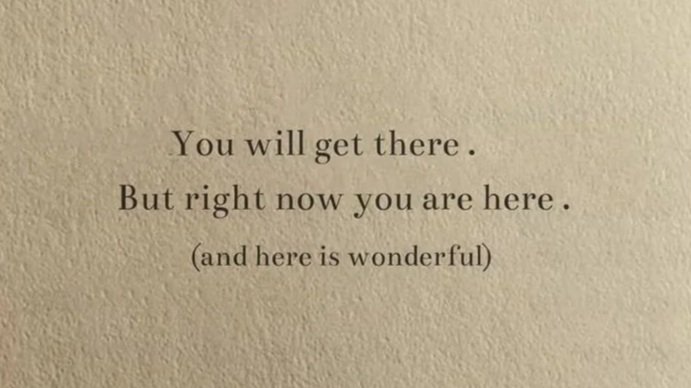
No one really tells you how loud college is until it ends.
There’s always somewhere to be, someone to see, something happening five minutes from now. Your days are structured for you. Your identity is implied. You are a student. You belong somewhere by default.
And then graduation happens.
The schedule disappears. The proximity fades. The group chats slow down. Suddenly, life becomes quieter, not in a peaceful way, but in a way that makes you aware of yourself again. Of your thoughts. Of your time. Of the space you now have to fill on your own.
This is the age of becoming.
Post-grad life isn’t the collapse people dramatize it to be. It’s not failure, and it’s not confusion in the way we’ve been taught to fear it. It’s something else entirely: a transition into a version of adulthood where structure is no longer provided, it has to be built.
In college, identity comes pre-packaged. Your major explains you. Your campus explains you. Your friends are a product of proximity and shared routines. After college, all of that dissolves. You’re no longer defined by where you go every day, but by what you choose to do when no one is watching.
That shift is jarring.
Loneliness sneaks in not because you don’t have people, but because life no longer overlaps the way it used to. Friends move to different cities. Schedules stop aligning. Relationships require intention instead of convenience. Social media makes it look like everyone else landed perfectly —the job, the city, the routine— while you’re still figuring out how to structure a Tuesday.
But this kind of loneliness isn’t a personal failure. It’s structural.
We move from environments designed for connection to ones that prioritize productivity. We lose built-in community without being taught how to rebuild it. And in that gap, it’s easy to assume something is wrong with us; when really, something is simply different.
This era asks different questions.
Who are you when you’re not optimizing for grades, résumés, or approval?
What do you enjoy when there’s no syllabus guiding you toward it?
Who do you become when your time is fully your own?
Becoming isn’t about reinventing yourself overnight. It’s quieter than that. It looks like trying a new hobby and being bad at it. Like saying yes to plans that don’t come with guarantees. Like building routines that ground you: morning walks, creative projects, movement, moments of stillness, journaling, simply because they make your days feel more yours.
It also looks like letting friendships evolve instead of forcing them to stay the same. Learning that closeness doesn’t always mean frequency. That some connections deepen through honesty, others through distance, and some through shared growth rather than shared space.
This phase can feel isolating, but it’s also expansive.
For the first time, your life isn’t a continuation of a system, it’s an open draft. You get to decide what matters. You get to experiment. You get to be new again.
There’s something powerful about realizing that you’re allowed to grow without permission. That not knowing doesn’t mean you’re behind, it means you’re still in motion.
The age of becoming isn’t about having it all figured out.
It’s about learning how to sit inside uncertainty without shrinking.
It’s about building a life slowly, intentionally, and honestly, one choice at a time.
And maybe that’s the point.
Not to arrive fully formed, but to keep becoming.